


Off-Season Commercial Pool Safety: Why Closed Commercial Pools Still Need a Safety Cover
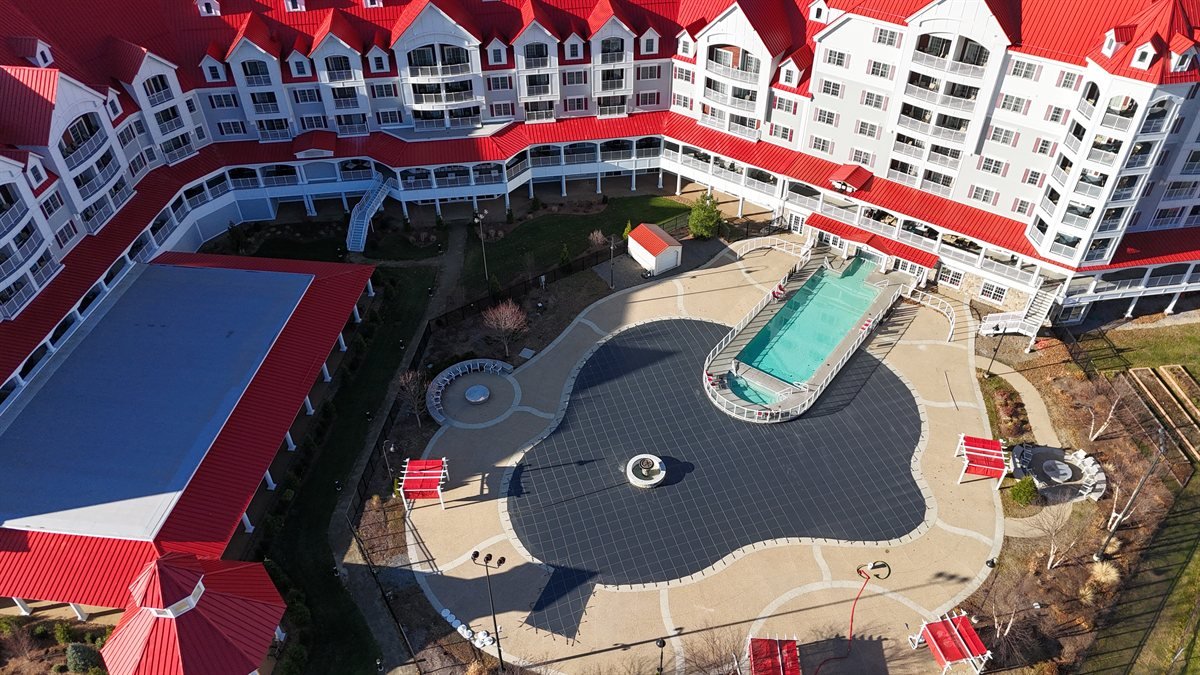
An off-season commercial swimming pool may be closed to swimmers, but it can still present a serious hazard. During periods when a facility is unoccupied or supervision is unavailable, pools can attract unauthorized access by children, teenagers, pets, wildlife, or trespassers. Gates, fences, and locks are essential—but they should not be the only safeguard protecting an unattended pool.
A properly specified, professionally installed safety swimming pool cover adds a critical physical layer of protection over the water. For commercial facilities, it helps transform an exposed pool into a secure, managed asset during the off-season.
A Stronger Layer of Protection for Closed Pools
Safety swimming pool covers such as LOOP-LOC® commercial safety swimming pool covers are custom measured for each pool and securely anchored into the surrounding deck. When installed and maintained correctly, the cover is tightly tensioned across the pool surface, creating a protective barrier designed to inhibit access to the water.
Commercial safety covers should be part of a comprehensive off-season pool safety program that also includes:
- Secure perimeter fencing
- Self-closing and self-latching gates
- Restricted site access
- Routine property inspections
- Clear warning signage
- Compliance with all applicable local, state, and facility requirements
A safety cover does not replace these measures. It enhances them by providing an additional barrier directly over the pool itself.
ASTM Compliance and Independent U.L. Certification Matter
When evaluating a commercial pool safety cover, it is important to look beyond general claims of strength or durability.
A true safety swimming pool cover should meet the performance requirements of ASTM F1346, the recognized standard for safety covers and labeling requirements for swimming pools, spas, and hot tubs. ASTM F1346 establishes performance criteria intended to help inhibit unsupervised access to the water when a cover is correctly installed and used according to the manufacturer’s instructions.
However, a manufacturer’s statement that its cover “meets ASTM standards” is not, by itself, the highest level of assurance.
For added confidence, commercial facilities should consider safety covers that have been independently tested and certified by Underwriters Laboratories (U.L.). U.L. certification provides third-party verification that the manufacturer’s specific cover system has undergone outside testing against applicable ASTM safety-cover requirements.
Ensure safety swimming pool covers not only meet and exceed ASTM F1346 safety-cover guidelines but have also undergone extensive independent testing through Underwriters Laboratories and earned U.L. certification.
This distinction is especially important for government agencies, municipalities, schools, parks, hospitality properties, multifamily communities, and other commercial facilities responsible for public safety. Independent U.L. certification helps provide added assurance that the actual cover system—not simply a manufacturer’s claim—has been evaluated for compliance with ASTM safety-cover performance requirements.
When specifying a commercial safety cover, request documentation confirming:
- Compliance with ASTM F1346 safety-cover performance requirements
- Current U.L. certification or U.L. listing applicable to the cover system
- Professional measurement and installation requirements
- Manufacturer care, maintenance, inspection, and warranty guidance
Why Covering a Commercial Pool Matters
1. Helps Reduce the Risk of Unauthorized Access
An open pool can become an attractive nuisance when a facility is closed, especially when staff are not present. A properly installed safety cover creates a substantial physical barrier over the water, helping reduce the opportunity for accidental entry into the pool.
2. Protects the Public, Facility, and Community
Schools, parks, municipalities, apartment communities, hotels, clubs, camps, and recreation facilities have a responsibility to manage risks during every season—not only when pools are open. Covering the pool helps demonstrate a proactive approach to off-season safety and facility stewardship.
3. Helps Preserve Water
A covered pool remains filled during the off-season rather than being drained. Retaining water reduces water waste, helps protect the pool structure, and simplifies reopening procedures—subject to local health department requirements, winterization practices, and the facility’s operating policies.
4. May Reduce Exposure to Debris and Contamination
A safety cover helps keep leaves, branches, windblown debris, and other contaminants out of the pool. This can reduce cleanup demands and support a more efficient seasonal reopening.
5. Supports Responsible Environmental Practices
Keeping a properly winterized pool filled reduces the need to dispose of chemically treated pool water. Disposal requirements vary by jurisdiction, so facilities should always follow local environmental and wastewater regulations.
6. Helps Protect the Pool Investment
By limiting debris exposure and reducing the effects of sunlight on the pool environment, a cover may help reduce off-season wear and support cleaner spring openings. It can also help protect the facility’s investment in its pool, finishes, equipment, and surrounding deck area.
7. May Support Risk-Management and Insurance Discussions
A documented off-season safety plan—including professionally installed safety covers, regular inspections, and secure site controls—may be relevant to a facility’s risk-management program. Insurance impacts vary by carrier, policy, facility type, loss history, and jurisdiction; facilities should consult their insurance professional regarding possible premium or coverage considerations.
Why Commercial Safety Covers
Commercial safety swimming pool covers must be custom designed for each pool and securely anchored into the surrounding deck. They are engineered to meet and exceed ASTM F1346 safety-cover performance guidelines and have undergone extensive independent testing through Underwriters Laboratories (U.L.), earning U.L. certification for safety swimming pool covers.
Key construction and performance features include:
- Custom measuring and professional installation for the individual pool
- Secure anchoring into the pool deck
- Strong, durable mesh materials that allow rain and melting snow to drain through the cover
- Durable double-thick solid polypropylene webbing around the entire perimeter—not only at the corners
- 302/304 stainless steel commercial spring system to maintain proper tension
- Brass anchors that screw down flush with the decking when the cover is not in use, so there are no tripping hazards
- Reduced debris accumulation and easier spring cleanup when the pool is properly winterized
Easy Off-Season Care and Maintenance
A safety cover is not difficult to maintain. The key is to establish a simple inspection routine and address issues promptly. The following procedures are based on LOOP-LOC care and maintenance guidance for Mesh Commercial Safety Covers.
Solid safety covers are not recommended for commercial applications due to their weight restrictions and non-draining fabrics.
1. Professional Installation Is Essential
Safety covers must be measured and installed by a qualified swimming pool professional. Proper installation is necessary to maintain the cover’s intended safety features and warranty coverage.
2. Maintain Proper Cover Tension
The cover should remain tightly stretched across the pool, similar in appearance to a trampoline. For in-ground pools, the adjustable springs should initially be compressed approximately 90 percent at installation. Over time, tension should be adjusted as needed to maintain approximately 75 percent spring compression. Proper tension is essential. A loose or sagging cover should be inspected and adjusted promptly by qualified personnel.
3. Maintain the Proper Water Level
Pool water provides important support beneath the cover during snow and ice conditions. For in-ground pools, maintain the water level approximately 15 to 18 inches below the top of the pool. Do not allow the water level to fall more than 18 inches below the top of the pool, as this can place excess stress on the cover. Facilities should coordinate water-level management with their pool professionals and follow local winterization requirements.
4. Conduct Periodic Inspections
The cover should be inspected periodically throughout the off-season. Check for:
- Loose straps or springs
- Loss of proper tension
- Tears, punctures, or fabric damage
- Damage caused by tree limbs, animals, vandalism, or storm debris
- Premature ultraviolet deterioration
- Anchors that are loose, damaged, or difficult to operate
Any cover requiring repair should be treated as unsafe until repaired. Promptly contact a qualified pool professional or authorized dealer to inspect the cover, and send it to the manufacturer for repair if applicable.
5. Keep the Pool Properly Winterized
A cover keeps out debris, but proper water chemistry remains necessary to help maintain clear, clean pool water during closure. At closing, use a pool-professional-recommended winterization program appropriate for the pool type and local conditions. This typically includes sanitizer and winterizing algaecide. Additional sanitizer or algaecide may be required during the off-season to maintain appropriate water chemistry and reduce algae growth. Facilities should monitor water chemistry according to their established maintenance plan and applicable local regulations.
6. Maintain Anchors and Deck Hardware
For in-ground covers, anchors should be removed and anchor casings flushed with water in the spring and fall. This helps prevent anchors from sticking. When the cover is not in use, anchors should be closed completely so they are flush with the deck. This helps reduce trip hazards around the pool perimeter.
7. Proper Removal and Storage
Before removing the cover, hose it off while it is still installed to remove debris. When removing the cover, accordion-fold it carefully and store it in a location protected from rodents and sharp objects. Do not drag the cover across the deck, over sharp edges, raised anchors, or obstructions. Proper storage helps preserve the cover and supports long-term performance.
A Practical Off-Season Safety Checklist
Before leaving a commercial pool closed for the season, confirm that:
- The pool has been professionally winterized.
- The safety cover has been professionally installed and properly tensioned.
- The water level is maintained at the recommended level.
- All straps, springs, anchors, and cover fabric have been inspected.
- Fencing, gates, locks, lighting, and warning signs are in working order.
- A routine inspection schedule has been assigned to facility staff or a pool professional.
- Any damage is reported and repaired immediately.
- Local health, building, environmental, and safety requirements have been reviewed.
Important Safety Notice
A safety cover is an important layer of protection, but no single safety device can replace responsible adult supervision when a pool is open or a complete facility safety program when a pool is closed. Never permit children, adults, pets, or animals to walk, play, or climb on a pool cover. Always maintain secure fencing, controlled access, routine inspections, and all required safety procedures.
This article is intended as general safety and maintenance information. A safety cover is one important layer within a comprehensive pool-safety program and does not replace required fencing, controlled access, adult supervision, inspections, or compliance with applicable local, state, federal, health department, building code, environmental, insurance, and facility-operating requirements. Facility owners and operators remain responsible for confirming that their pool, cover system, installation, and maintenance practices comply with all requirements applicable to their location and use.
About LOOP-LOC
Founded in 1978, LOOP-LOC is nearly five decades strong as a trusted manufacturer of premium safety pool covers and vinyl liners, proudly made in the U.S.A. Known for innovation, quality craftsmanship, and exceptional customer support, LOOP-LOC helps homeowners and pool professionals protect and enhance pools of every shape and size. For more information or to find an authorized dealer near you, visit the LOOP-LOC Dealer Locator today.

 Made in the U.S.A.