

How to Know When It's Time to Replace Your Pool Liner
How to Know When It's Time to Replace Your Pool Liner
Your pool liner does more than make the water look good. It's the waterproof barrier between your pool water and the structural frame beneath it — the steel, polymer, or concrete walls that define the pool's shape. When a liner fails, water doesn't just disappear. It can erode the supporting substrate, rust metal wall panels, and compromise the structural integrity of the entire pool.
Knowing when to replace your liner — rather than patch it, ignore it, or delay — is one of the most important decisions a pool owner makes. This guide covers the definitive signs, the factors that influence liner lifespan, what to do when you spot them, and how choosing a quality CFFA certified LOOP-LOC® replacement liner protects that investment going forward.

How Long Should a Pool Liner Last?
The honest answer: it depends. The industry standard for a quality inground vinyl liner is 7 to 10 years with proper care and balanced water chemistry. Some liners last longer. Some may not reach 8 years due to outside exposures. The variables are real:
- Water chemistry — pH and chemical balance are the single largest determinants of liner longevity. Imbalanced water bleaches, stiffens, and degrades vinyl far faster than normal wear. *bring your water in for testing at least two times a month and it’s important to remember that even salt generator pools need chemicals added as a routine.
- Sun and UV exposure — pools in high-sun climates can experience accelerated fading and vinyl degradation above the waterline over a number of years.
- Liner quality — CFFA-certified premium liners, like LOOP-LOC's, are engineered to withstand demanding conditions of pool ownership. Uncertified, lower-grade liners are not.
- Usage patterns — high traffic, pets with sharp nails, rough pool toys, and improper chemical dosing all accelerate wear.
With a LOOP-LOC luxury liner — manufactured from virgin vinyl in 20 mil or 28 mil thicknesses and backed by a 20-year pro-rated warranty — homeowners who maintain proper water chemistry regularly report liner life at the upper end of that range.
The 7 Signs Your Liner Needs to Be Replaced
1. Visible Fading and Discoloration
Some fading is completely normal over time. UV rays and pool chemicals gradually affect the liner's color as is inherent with all outdoor products. But significant, uneven fading — particularly white spots, blotchy discoloration, or patterns that have become nearly invisible — signals more than a cosmetic issue. The UV-protective coatings on the vinyl have broken down, the material has thinned, and the liner is becoming structurally vulnerable. Aggressive, permanent staining from algae or rust that cannot be removed through cleaning is in the same category.
What it means: The liner is past its prime. Aesthetic deterioration and structural deterioration are happening simultaneously.
2. Cracks, Tears, and Frequent Punctures
Small punctures and minor tears can often be repaired with a vinyl patch kit — your pool dealer can advise on the right product. However, if tears are becoming more frequent, appearing in multiple locations, or recurring in areas you've already patched, the liner has lost its elasticity. Vinyl becomes brittle as it ages, and brittle vinyl will not hold a patch reliably. The material surrounding the tear is typically just as compromised.
Important: Never ignore a tear in your liner, regardless of size. Water escaping through a liner can erode the substrate behind pool walls, leading to structural damage that is far more expensive to repair than a liner replacement.
Tears in high-stress areas — corners, along seams, behind ladders, and around fittings — are particularly serious. These zones experience the most movement and pressure.
3. Unexplained Water Loss
All pools lose some water to evaporation — typically less than ¼ inch per day. If you're adding water more frequently than in past seasons, or if your water level is dropping faster than weather conditions explain, your liner may be leaking.
The bucket test: Fill a bucket with pool water and set it on the pool steps. Mark both the water level in the bucket and the pool water level. After 24 hours, compare. If the pool water has dropped significantly more than the bucket, you have a leak. Contact your swimming pool professional to investigate.
Even small leaks compound over time. Water migrating behind the liner can cause soil erosion, undermine wall support, and in pools with metal walls, initiate corrosion.
4. Wrinkles, Sagging, and Stretching
A properly installed, well-maintained liner should lie flat against the pool walls and floor. While one or two small wrinkles can be common in all liner installs from initial installation, if you're seeing persistent wrinkles — especially wrinkles that weren't there previously — the liner has stretched beyond its design parameters, lost elasticity, or has been affected by a high-water table (which can cause the liner to 'float' off the pool base).
Wrinkles are not just cosmetic. They create folds where algae accumulates, areas where UV damage concentrates, and stress points where future tears are more likely to originate.
5. The Liner Is Slipping Out of the Coping Track
The liner's top edge is held in place by a coping track along the pool walls. As vinyl ages and loses elasticity, it can begin to pull away from the track and slip back into the pool. In corners especially, this is a common sign of a liner approaching the end of its service life. While a technician may be able to temporarily re-seat the liner using heat, if your liner is getting up there in age, this is typically a sign that replacement planning should begin.
6. Brittle or Stiff Texture
Healthy vinyl is flexible and smooth to the touch. Run your hand along the liner above the waterline, where UV exposure is most intense. If the material feels stiff, dry, or brittle rather than pliable, the vinyl is breaking down at a molecular level. This brittleness will spread, and the liner is increasingly prone to cracking under normal movement and temperature changes.
7. The Liner Is More Than 10 Years Old and Showing Any of the Above
Liner age matters. A 12-year-old liner showing a small wrinkle is a different situation from a 4-year-old liner showing the same wrinkle. If your liner has been in service for 10 or more years and you are seeing any of the above symptoms, the calculus almost always favors replacement. Continued patchwork on aging, inflexible vinyl is a short-term solution to a liner that has reached end-of-life.
When Is the Best Time to Replace a Liner?
Early spring is the ideal window — before pool season begins, while demand for installation crews is still manageable, and while there's lead time to order a custom liner. Fall is the second-best option. Replacing in the middle of summer means losing swimming days to installation.
LOOP-LOC luxury liners typically ship within 5 to 6 business days from order. Your dealer will handle measurement, ordering, and installation coordination.
What to Choose When You Replace
A liner replacement is an opportunity, not just a maintenance task. It's the moment to upgrade the look of your pool, choose a more durable liner thickness, and ensure the new liner is custom-measured for a perfect, wrinkle-free fit.
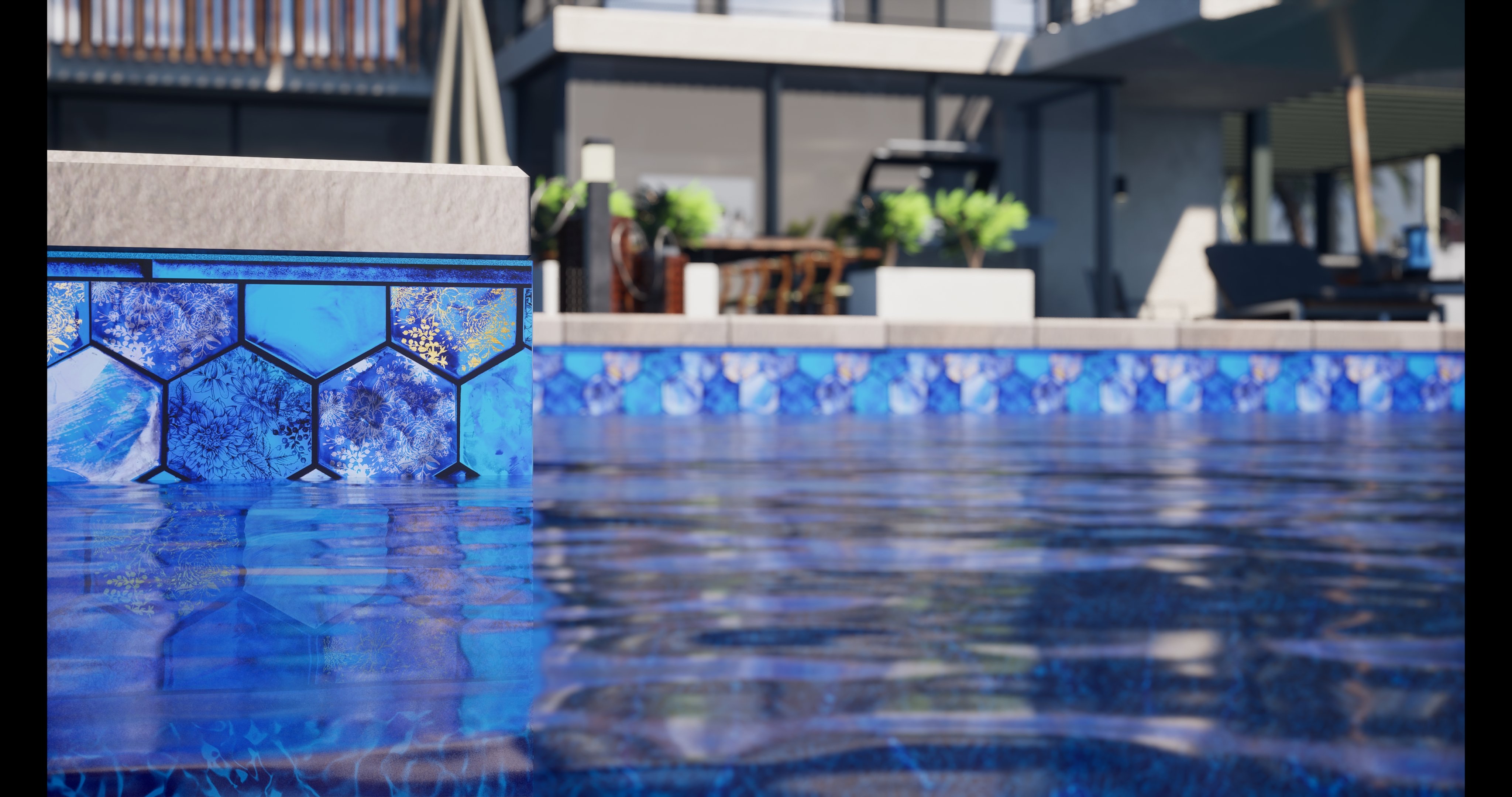
LOOP-LOC luxury liners are manufactured from CFFA-certified virgin vinyl in 20 mil and 28 mil thicknesses, precision-fabricated using state-of-the-art computer technology for an exact fit on any pool shape. With over 40 exclusive patterns — from deep-water blues to sophisticated stone textures — a liner replacement is also a design refresh.
All LOOP-LOC liners resist puncturing, algae, mold, mildew, and bacteria, with proper chemical maintenance treatments, and are backed by a 20-year pro-rated warranty. They are only available through LOOP-LOC authorized dealers, who will ensure proper measurement and professional installation.
The bottom line: Don't wait for a catastrophic failure. If your liner is showing multiple warning signs, or has been in service for 10+ years, a replacement protects your pool, your investment, and anyone who swims in it.
Ready to Upgrade Your Pool?
LOOP-LOC® luxury liners are available exclusively through authorized LOOP-LOC dealers. Your dealer will measure your pool, help you choose the right pattern and thickness, and handle installation from start to finish.
- Browse all 40+ exclusive patterns: looploc.com/pool-liners
- Visualize your dream pool with MIRAGE®: looploc.com/mirage
- Find a certified LOOP-LOC dealer near you: looploc.com/dealer-locator

 Made in the U.S.A.